Study Approach
Explores the reasons we decided to study on this project
Motivation
According to the Environmental Agency of Taiwan, solid recycled fuel, also known as SRF, is a type of alternative fuel made from non-recyclable waste, typically used in energy-intensive industries. SRF is produced through a series of waste processing steps (collection, sorting, shredding, size reduction, drying, separation, refining, and final processing) which aims to convert non-recyclable waste into a fuel for energy production. It provides several key benefits that can be categorized into five categories: environmental, economic, energy security, social health, and technological advancements. In terms of the environment, it effectively reduces landfill waste, greenhouse gas, and promotes resource recovery. For the economy, it is very cost saving for industries, creates multiple jobs, and creates revenue from waste. Moreover, in the energy securing aspect, it is a very reliable alternative fuel source, efficient in heat production, and can be adapted within different industries. In addition, by reducing waste production, we are able to reduce the health hazards associated with waste and landfill emissions. Lastly, Solid Renewable Fuel (SRF) fosters innovation in waste processing and aligns with Sustainable Development Goals (SDGs), offering added value to companies pursuing Environmental, Social, and Governance (ESG) objectives.
Despite having so many benefits, the SRF industry in Taiwan is still at its early stages, therefore creating several concerns and challenges throughout the nation. For example, many people may view SRF as a low-quality, pollution-creating fuel, which leads to negative perceptions. The combustion of SRF does release pollutants and it raises health concerns among nearby communities which further cause local opposition and “Not-In-My-Backyard” Sentiment. Thankfully, those issues can be simply solved by implementing air cleaning facilities and increasing public awareness throughout the community.
Acknowledging these issues, our team is keen to explore the backstory of the SRF industry by actually stepping into the factories and understanding the in and outs of it. Therefore our team is able to contribute to the society by uncovering the backstory of the SRF industry to help people better understand and realize its impact that SRF can contribute to the nation. Hopefully, we are able to bring justice to the SRF community so more people can use it for the nation’s greater goods.
Study Purpose
The goal of this research is to evaluate the potential of SRF in benefiting the community through aspects of sustainability, economy, and technical feasibility. We wanted to uncover SRF’s benefits, such as its ability to reduce landfill waste through actual visits to the SRF factory. Additionally, this study incorporates perspectives from various stakeholders, including local residents near the SRF factory, general public, and factory owners, to address their concerns.
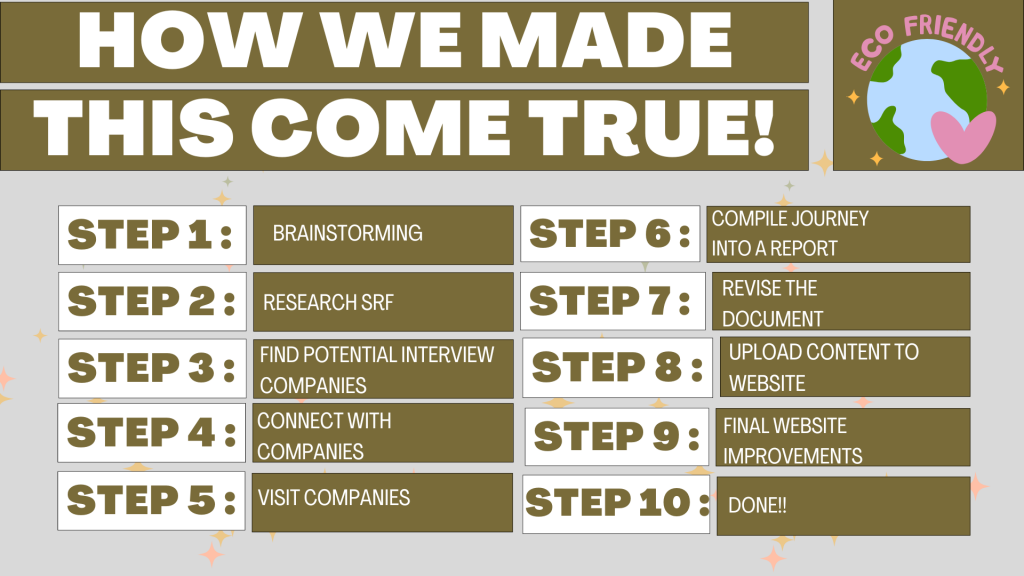
Research Process